
"Central America"
5000 article(s) found

Recommendation of West Valley Manor in the Western Valley of Costa Rica
West Valley Manor in the western valley of Costa Rica recommended Central America as a land bridge connecting North and South America. There are seven countries, namely, Belize, Costa Rica, El Salvador, Guatemala, Honduras, Nicaragua and Panama. Seven Central American countries all produce coffee, with Guatemala, Costa Rica and Honduras among the top 10 coffee exporters in the world. Coffee

The Origin and Development of Fine Coffee beans in Linna Manor, Nicaragua, one of the poorest countries in Central America
Nicaragua is one of the poorest countries in Central America. Due to its poor economic foundation, the coffee industry is still relatively backward, while coffee farmers are in extreme poverty. Fortunately, Nicaraguan coffee has received some foreign aid funds to improve the quality of its coffee. Nicaragua, an economically backward agricultural country, is one of the poorest countries in Central America.

Panama has the highest Baru Volcano coffee in Central America.
Panama has one of the highest volcanoes in Central America: Mount Baru. The Baru volcano has an altitude of more than 3474 meters, and the surrounding land is nutritious and balanced, providing sufficient conditions for the sowing and cultivation of Panamanian coffee. The cold air stream converges and flows above 2262 meters in the Central Mountains, thus creating more and more in the Bouquete and Volcan regions.

Know Central American Coffee-- introduction to El Salvador Coffee producing area
For more information on coffee beans, please follow the Coffee Workshop (Wechat official account cafe_style) Central America is a land bridge connecting North and South America. There are seven countries, namely, Belize, Costa Rica, El Salvador, Guatemala, Honduras, Nicaragua and Panama. Coffee is produced in seven Central American countries, including Guatemala, Costa Rica and Acer.

A brief introduction to the production and sales of coffee beans at the lemon tree manor in Nicaragua in central Central America
Madriz is an ecological coffee with a very hard shell. In the pure natural planting environment, it uses more complex operations to maintain the delicate aroma and taste of the coffee; it is produced in northern Nicaragua between Matagalpa and Jinotega, with an average annual rainfall of 1500-1700mm and a temperature of 20-29 degrees Celsius. All use manual selection of coffee.

El Salvador, Northern Central America Coffee Region Manor Flavor Taste Introduction
El Salvador is located in the north of Central America and is the most densely populated country in Central America. Honduras borders the country to the north, the Pacific Ocean to the south and Guatemala to the northwest. The national economy is dominated by agriculture, with coffee and cotton as the main crops. El Salvador is also one of the birthplaces of ancient Mayan culture, not only with a distant culture, but also with volcanoes, plateau lakes and the Pacific coast.

Nicaragua Coffee, Central America's Poorest Coffee Producer
Nicaragua is now one of the poorest countries in Central America. Because of its poor economic base, the coffee industry is still in a relatively backward state, while coffee farmers are in an extremely poor state. Fortunately, Nicaragua's coffee has received some foreign aid funds to improve the quality of its coffee. Nicaragua's Madagerba, Chinodega, Segovia region of coffee
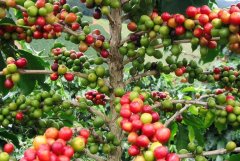
Nicaragua and Lemon Manor Nicaragua is located in central Central America, which is the largest in China and the United States.
Nicaragua, located in the middle of Central America, is the largest country in China and the United States, bordering Honduras in the north, Costa Rica in the south, the Caribbean Sea in the east and the Pacific Ocean in the west. The eastern part is the coastal plain, the high temperature and rainy climate belongs to the tropical maritime climate, and the western part is the coastal lowland with more active volcanoes. The north-central part is a highland, with an average annual temperature of 18 ℃ and an annual precipitation of 1500-2500mm.

Nicaraguan coffee with rich mellow and fragrant flavor in central Central America
Madriz is an ecological coffee with a very hard shell. In the pure natural planting environment, it uses more complex operations to maintain the delicate aroma and taste of the coffee; it is produced in northern Nicaragua between Matagalpa and Jinotega, with an average annual rainfall of 1500-1700mm and a temperature of 20-29 degrees Celsius. All use manual selection of coffee.

Introduction to the flavor of Nicaraguan coffee producing area located in central Central America
When tasting Nicaraguan coffee, it is best to drink cold water first, so that you can better feel its mellow taste. Drink coffee while it is hot, because the tannins in Nicaraguan coffee are easy to change during cooling, and the taste becomes sour, which will affect the flavor of the coffee. You can add the right amount of sugar, and then add cream. Enjoy a cup of high quality Niga

Nicaraguan Coffee treated with Water in Central America Matagalpa is introduced.
The suitable climate provides an excellent growth environment for the cultivation of coffee. The mineral-rich pozzolanic soil provides abundant nutrients for the cultivation of coffee trees. High-quality Nicaraguan coffee is also grown in the northern and central highlands of the country. The best coffee is produced in Matagalpa (Matagalpa), which is highly respected by coffee lovers all over the world.

In 2017, Honduras officially became the largest coffee producer in Central America.
Professional baristas follow the Coffee Workshop (official Wechat account cafe_style) Coffee International (OIC) said that it is estimated that Honduras is already the largest coffee producer in Central America, with Honduran coffee production reaching 7.2 million piculs in the 2016-2017 harvest year, an increase of 6.6 percent over the previous harvest year. The OIC report shows that the current harvest year, which begins on October 1st,

Introduction to the varieties of El Salvador coffee beans in Central America
Coffee from El Salvador is a specialty of Central America, where it is light, fragrant, pure and slightly sour. Like Guatemala and Costa Rica, coffee in El Salvador is graded according to altitude, and the higher the altitude, the better the coffee. The best brand is Pipil, which is what the Azbec-Aztec Mayan called coffee, which has been acquired.

Will the coffee treated by honey and anaerobic treatment surpass the washing method in Central America?
For decades, classic washed or wet processed coffee from Central America and Mexico has become one of the most popular types of coffee in the world. Usually clean, usually sweet and sour, with a range of ever-changing fruit flavors always drupes, usually some oranges and flowers, nuts and caramel to rich dark chocolate, depending on coffee and roasting. Most likely, some fragrance.

Coffee exports in Central and South America stabilize
Coffee exports from Central America, Mexico, Colombia, Peru and the Dominican Republic rose 4.5 percent in October from a year earlier, Guatemala's National Coffee Association (Anacafe) said today. October is the first month of this coffee harvest year. According to statistics, the total coffee export volume of the above countries in October was 1,947,884 bags (60 kg per bag), compared with the whole season of the previous harvest year.
Coffee bean producing areas-Central America-El Salvador (El Salvador)
Well-known representative coffee: El Salvador (El Salvador) Hot Spring Coffee El Salvador is the smallest country in Central America, flanked by Guatemala and Honduras. Because there are two parallel mountains in the country, the volcanic soil is rich in minerals, and this special geographical environment makes El Salvador suitable for growing coffee. Sal.

Coffee bean producing areas-Central America-El Salvador
Well-known representative coffee: El Salvador (El Salvador) Hot Spring Coffee El Salvador is the smallest country in Central America, flanked by Guatemala and Honduras. Because there are two parallel mountains in the country, the volcanic soil is rich in minerals, and this special geographical environment makes El Salvador suitable for growing coffee. Sal.

Renas Manor in the Santa Ana Volcano region of El Salvador in the north of Central America
The Republic of El Salvador, located in the north of Central America, is the most populous country in Central America. The country is bordered by Honduras to the north, the Pacific Ocean to the south and Guatemala to the northwest. The national economy is dominated by agriculture, and the main crops are coffee and cotton. El Salvador is also one of the birthplaces of ancient Mayan culture, with not only distant culture, but also volcanoes, plateau lakes and Pacific coast.

The ancestor of coffee in Central and South America, the most important coffee producing area in the world, the coffee consumed around the world.
Central and South America is now the most important coffee producing area in the world, accounting for more than half of the coffee beans consumed in the world. When it comes to the ancestor of Coffee in Central and South America, we have to mention an island, Martinique, and a soldier, Deckley. In 1723, de Klee, a French naval officer who returned home on leave, got a coffee seedling. Dirkley finally planted the coffee seedling.

Introduction to the types, varieties, taste and flavor of coffee beans
Mantenin (Indonesia, Sumatra, Asia) Acid 0 Glycerol 3 Alcohol 3 aroma 3 characteristic Flavor Blue Mountain (Jamaica, Central America, West Indies) Acid 1 Gump 3 bitter Alcohol 3 aroma 3 the highest quality Columbia (Colombia, South America) Acid 2 Glycerol 3 bitter Alcohol 3 aroma 2 most Standard quality Mocha (Isbiya, Africa) Acid 3 Glycine 2 bitter 1 Alcohol 2 aroma 2 characteristic Flavor Clemangaro (Tanzania)